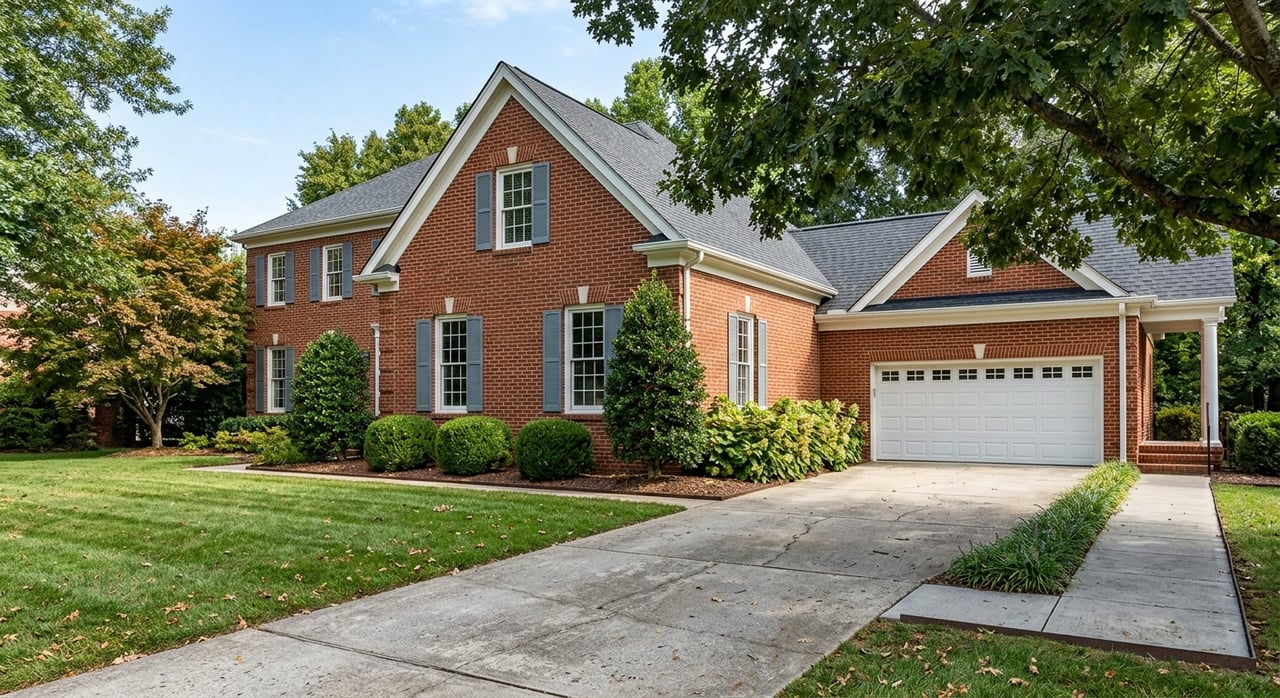
Are you wondering whether Sequoyah Hills is the kind of neighborhood that can hold its value over time? That is a smart question, especially in a market where price alone does not tell the full story. If you are buying, selling, or weighing a long-term hold in this part of Knoxville, it helps to understand what gives the area its staying power. Let’s look at the local factors that shape long-term value potential in Sequoyah Hills.
Sequoyah Hills starts with location
Sequoyah Hills sits just west of downtown Knoxville and the University of Tennessee along the Tennessee River and Kingston Pike corridor. That close-in location gives you strong access to the city core while still offering a distinctly residential setting.
For long-term value, location is often the first piece of the puzzle. In Sequoyah Hills, the appeal is not just convenience. It is the combination of city access, river proximity, and a neighborhood identity that feels established rather than interchangeable.
Neighborhood stability matters
Knoxville’s General Plan classifies Sequoyah Hills as a pre-1945 suburban neighborhood. The plan notes that communities built with this kind of neighborhood design are remarkably stable over time.
That matters because stable neighborhood patterns often support steady buyer interest across changing market cycles. When you are thinking long term, stability can be just as important as short-term price spikes.
The neighborhood association also describes Sequoyah Hills as one of Knoxville’s oldest premier residential sections. Over time, it evolved from scattered mansions and farmland into a more diversified suburban neighborhood, which helps explain its layered character today.
Character creates scarcity
One of the biggest value drivers in Sequoyah Hills is that it does not feel like a standardized housing market. It reads more like a scarcity-and-character market, where setting, street pattern, and architectural identity all carry weight.
Sequoyah Hills was Knoxville’s first subdivision completed with curvilinear streets. Underground utilities and preserved trees shaped the original development pattern, and those early design choices still define the neighborhood.
For you as a buyer or owner, that means the appeal is hard to duplicate in newer areas. Mature landscaping, winding streets, and established lot settings are part of the long-term value story because they are limited and difficult to recreate.
Older housing stock can be a strength
About half the housing units in Sequoyah Hills were built before 1950, according to the 2007 West City Sector Plan. Older homes are not automatically a value advantage, but here they exist within a generally well-maintained residential base.
The same plan noted that more than 90% of the sector’s housing stock was rated in average or above-average condition. That suggests a neighborhood where upkeep has remained part of the ownership culture.
If you are evaluating a home here, this is where careful due diligence matters. In an older neighborhood, long-term value often depends on how well a property has been maintained, how thoughtfully it has been updated, and whether any renovation work fits the home’s setting and character.
Preservation supports identity
Parts of Sequoyah Hills benefit from a conservation-minded framework. A Neighborhood Conservation Overlay applies to the Scenic Drive area, with the stated purpose of preserving the setting, architectural heritage, and landscape character.
That does not mean every home is frozen in time. It means some of the qualities that make the area distinct are being protected intentionally.
From a long-term value perspective, this can help support neighborhood identity. In places where buyers are drawn to character and setting, preservation tools can reinforce what makes the area desirable over time.
Lifestyle amenities add daily value
Long-term value is not just about the house. It is also about how the neighborhood works for everyday life.
Sequoyah Hills Park covers 84.53 acres and includes boat and kayak access to the Tennessee River, fishing, open space, unpaved trails, ballfields, restrooms, and outdoor fitness equipment. These are meaningful local amenities that support both recreation and day-to-day enjoyment.
The Sequoyah Greenway runs 2.7 miles along the median of Cherokee Boulevard and connects to Third Creek Greenway and Talahi Park. The city also notes blueway access on the Tennessee River, adding another layer of outdoor appeal.
Smaller spaces also contribute to livability. Talahi Park and Whitlow-Logan Park provide neighborhood-scale recreation, and Whitlow-Logan Park is near Sequoyah Elementary School and the Sequoyah Branch Library.
When a neighborhood offers built-in ways to spend time outdoors, move around easily, and enjoy the setting, that can strengthen its long-term appeal. Buyers often respond to a quality of place they can feel right away.
Everyday convenience helps too
Sequoyah Hills is not purely about scenery and historic charm. The neighborhood association notes a small business district with informal dining, real estate companies, a bank, and other businesses.
That kind of convenience adds value without shifting the area away from its residential identity. For many buyers, having useful daily services nearby makes the neighborhood more practical as well as more appealing.
Visual identity has staying power
Cherokee Boulevard is described by the City of Knoxville as a scenic tree-lined boulevard with rolling hills and older homes. Sequoyah Hills is also a featured Dogwood Arts Festival tour, and Dogwood Arts says it was the city’s first dogwood trail, established in 1955.
That may sound cultural rather than financial, but it matters. Neighborhoods with a strong visual identity often stand out in the market because they are memorable and deeply tied to place.
In Sequoyah Hills, the landscape is part of the value equation. Tree canopy, boulevard design, and river adjacency all contribute to an atmosphere that feels established and hard to replace.
What current market signals suggest
Recent market snapshots point to a high-demand, upper-tier neighborhood with relatively tight supply. Realtor.com described Sequoyah Hills as a seller’s market in May 2026, with homes selling for 1.52% below asking on average and a sale-to-list ratio of 98%.
Redfin reported a median sale price of $874,706 over the three months ending May 2026, up 2.9% year over year. It also reported a median of 47 days on market and 24 homes sold.
Realtor.com’s listing page showed 37 active homes and a median listing price of $895,000. While portal data can vary based on timing and methodology, the broader takeaway is consistent: Sequoyah Hills remains a relatively limited-inventory market with strong buyer interest.
For you, that means long-term value here may be supported less by volume and more by sustained demand for a specific kind of neighborhood experience. That is often an important distinction in established markets.
Long-term value is more than appreciation
If you are trying to gauge the future upside of Sequoyah Hills, it helps to think beyond quick appreciation alone. The stronger long-term story is the combination of scarcity, historic character, mature landscaping, river access, and neighborhood-scale amenities.
Those qualities are difficult to replicate elsewhere in West Knoxville. That does not guarantee any individual home’s performance, but it does help explain why the neighborhood tends to remain desirable.
This is also why two homes in the same neighborhood can have different value trajectories. In a setting like Sequoyah Hills, lot position, street presence, renovation quality, and how well a home fits its surroundings can matter just as much as interior finishes.
What buyers should watch closely
If you are considering a purchase in Sequoyah Hills, a long-term mindset usually pays off. This is not the kind of neighborhood where you should focus only on trendy cosmetic updates.
Instead, pay close attention to:
- Lot setting and how the home sits on the street
- Condition and maintenance history of older systems and structure
- Renovation quality and whether updates feel cohesive with the home
- Access to parks, greenway, and main neighborhood corridors
- Overall neighborhood character that may support future buyer demand
In a character-driven market, purchase discipline matters. Buying the right property at the right basis is often more important than chasing short-term upside.
What sellers can learn from this market
If you own a home in Sequoyah Hills, your value story may be bigger than square footage and finish selections. Buyers are often responding to the full package, including location, lot, mature landscape, neighborhood identity, and access to local amenities.
That is why presentation and positioning matter. A thoughtful pricing strategy, strong marketing, and clear communication around condition and updates can help buyers understand what makes your home stand out in a preservation-sensitive, lifestyle-driven market.
Why local guidance matters here
Sequoyah Hills is not a plug-and-play neighborhood. Because homes vary in age, layout, condition, and renovation history, it takes careful analysis to understand what supports value on a specific property.
This is where neighborhood knowledge and construction fluency can make a real difference. If you are buying, selling, or evaluating an investment hold, you want advice that goes beyond headlines and looks closely at condition, setting, and long-term market fit.
If you want personalized guidance on buying, selling, or evaluating value in Sequoyah Hills, Ashley Wade offers bespoke representation backed by local expertise, marketing strategy, and renovation-aware insight.
FAQs
What supports long-term value in Sequoyah Hills?
- Long-term value in Sequoyah Hills is supported by its close-in Knoxville location, historic character, mature landscaping, river access, established street pattern, and neighborhood amenities that are difficult to replicate elsewhere in West Knoxville.
Is Sequoyah Hills considered a stable Knoxville neighborhood?
- Yes. Knoxville’s General Plan classifies Sequoyah Hills as a pre-1945 suburban neighborhood and notes that neighborhoods built with this type of design are remarkably stable over time.
How competitive is the Sequoyah Hills housing market?
- Recent market snapshots suggest Sequoyah Hills is a high-demand, upper-tier market with relatively tight supply, including seller’s market conditions, a 98% sale-to-list ratio, and a median sale price reported at $874,706 for the three months ending May 2026.
Why do older homes in Sequoyah Hills still attract buyers?
- Many buyers are drawn to the neighborhood’s older homes because of their established setting, architectural character, mature trees, and location within a generally well-maintained residential area.
What should buyers evaluate before purchasing in Sequoyah Hills?
- Buyers should look closely at lot setting, maintenance history, structural and system condition, renovation quality, and how well the property fits the surrounding character of the neighborhood.
What makes Sequoyah Hills different from newer neighborhoods in West Knoxville?
- Sequoyah Hills stands out for its curvilinear streets, preserved trees, underground utilities, river access, historic identity, and strong sense of place rather than a more standardized subdivision feel.
