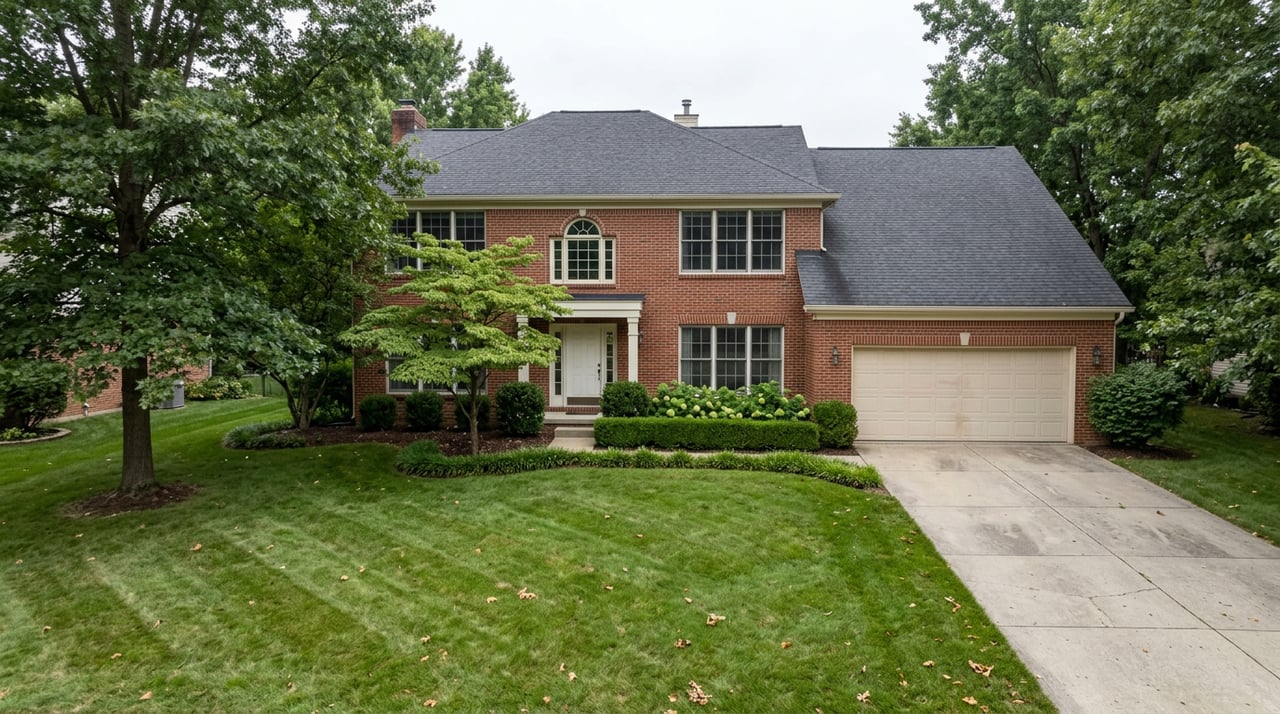
Open two browser tabs and search Rocky Hill home prices this week. One will tell you the median list price is $465,000, working out to about $234 a square foot, based on February 2026 data. Another, pulling from the same general window, puts the median sold price at $616,000 for a typical 2,585 square foot house, closer to $238 a square foot. Same neighborhood. Same season. A gap north of $150,000 in the headline number.
Neither figure is wrong. They are measuring different things, and the difference matters more in Rocky Hill than it would almost anywhere else in West Knoxville, because of a rule change that took effect industry-wide last year and lands especially hard on small, fast-moving neighborhoods like this one.
What "median price" is actually counting
Part of the gap is definitional. A list price is a snapshot of what sellers are asking right now. A sold price reflects what buyers actually paid, over whatever trailing window that source uses. Those two numbers were never going to line up perfectly, in Rocky Hill or anywhere.
But look at the price per square foot instead of the total, and the two sources land within four dollars of each other, at $234 and $238. That's the tell. The size of the house isn't what's driving the six-figure spread in the headline totals. What's driving it is that each source is drawing its median from a different pool of transactions, and in Rocky Hill, that pool has gotten harder to see in full.
The rule that changed what "for sale" means
For years, the industry's baseline rule was straightforward. Once a REALTOR marketed a home to the public, whether with a yard sign, a flyer, or a listing on a brokerage website, the listing broker had one business day to file it with the local MLS so every other participating agent could see it too. That's the Clear Cooperation Policy, adopted by the National Association of REALTORS in November 2019 and effective the following May. East Tennessee Realtors, the MLS that covers Rocky Hill, still has this exact language on the books: within one business day of marketing to the public, the listing broker must submit the listing to the MLS for cooperation with other participants.
What changed is the definition of public marketing itself. On March 19, 2025, NAR introduced a policy called Multiple Listing Options for Sellers, which created a new category called delayed marketing exempt. Under this option, a seller's agent files the listing with the MLS as required, so it's visible to every cooperating agent in the system, but holds it back from IDX syndication, meaning it doesn't show up on the public-facing sites buyers check on their phones. By 2026, MLSs that adopted the option had finished building it out, though how much sellers actually use it still varies from one market to the next.
That gap between filed and syndicated is exactly where a chunk of Rocky Hill's transaction history now lives. A listing can exist inside the system, fully compliant with the rule, and still be invisible to a buyer scrolling a portal from their couch.
What a seller is actually trading
Going the delayed marketing route isn't free. A multi-state study by BrightMLS and Drexel University found that homes fully exposed on the MLS sold for 17.5% more than comparable homes sold off the public market. Apply that percentage to Rocky Hill's own $616,000 median sold price and you get a rough sense of what's at stake locally, somewhere in the neighborhood of $108,000. That's not a number specific to any single Rocky Hill sale. It's the national trade-off, translated into local terms, and it's the number a seller is implicitly weighing every time they choose privacy over full exposure.
For some sellers that trade makes sense. Testing a price quietly, avoiding a parade of open houses, or simply not wanting a listing history attached to the address are all reasons an owner might accept a smaller buyer pool on purpose. What's changed since March 2025 is that this choice now has a formal, sanctioned path inside the MLS itself, rather than living in the gray area of an old-style pocket listing.
Why the swings look so dramatic here
Rocky Hill's small size compounds the problem. One portal's own numbers for February 2026 show days on market falling 61% year over year, down to a median of 49 days. A drop that steep usually means one of two things: either the market genuinely accelerated, or the sample is thin enough that a handful of unusual sales can swing the month-over-month comparison hard in either direction. In a neighborhood where a single portal counts only a few dozen transactions a year, both things can be true at once, and adding an unknown number of delayed-marketing sales that never register in that count at all only widens the margin for error.
This is the part that gets lost when a headline number gets repeated as neighborhood fact. It isn't that the data is fabricated. It's that a small, tightly held market filtered through a single data source will always look noisier and less complete than a larger one, and Rocky Hill is about as small and tightly held as West Knoxville neighborhoods get.
What this means if you're actually searching here
A few practical adjustments follow from all of this.
- Treat any single portal's median as a rough estimate, not neighborhood truth. Cross-check two or three sources and expect them to disagree by a meaningful margin.
- Ask any agent you're working with whether they can show you the full MLS feed, not just what happens to be syndicated to public sites that week. Delayed marketing exempt listings are visible to MLS participants well before a portal ever picks them up.
- If Rocky Hill is the neighborhood you actually want, say so to your agent before you start waiting on portal alerts. By the time an algorithm pushes a Rocky Hill listing to your phone, it may already be weeks into its real life on the market, or it may never reach your phone at all.
- Ask for sold data over a six to twelve month trailing window rather than a single month's snapshot. In a neighborhood this size, monthly percentages move around more than they mean.
This is also, plainly, the case for working with someone who has a standing presence in the MLS pipeline rather than someone forwarding you portal alerts. Ashley Wade works out of Keller Williams Greater Knoxville, which means access to the full East Tennessee Realtors MLS feed, delayed marketing listings included, alongside a boutique practice built around West Knoxville neighborhoods like Rocky Hill specifically. That combination is the practical answer to everything above: it's not about picking the right website, it's about not depending on one at all.
A couple of questions that come up
Does delayed marketing mean a listing is hidden from every agent, not just the public? No. A delayed marketing exempt listing still has to be filed with the MLS under Clear Cooperation. Any real estate professional who participates in East Tennessee Realtors can see it. What gets held back is the public-facing syndication to sites like the ones consumers check directly.
Is this a Rocky Hill quirk, or does it happen everywhere? The policy is national and applies the same way in every neighborhood the MLS covers. Its effect is just more visible in small, high-demand pockets like Rocky Hill, where the total number of transactions is low enough that a few delayed-marketing sales can meaningfully change what the public data shows.
If you're trying to make sense of what's actually happening in Rocky Hill's market, or you want a search strategy that doesn't depend on which portal happened to update first, Ashley Wade is worth a conversation. Request your bespoke consultation and get a read on the neighborhood that accounts for what the listing sites can't show you.
