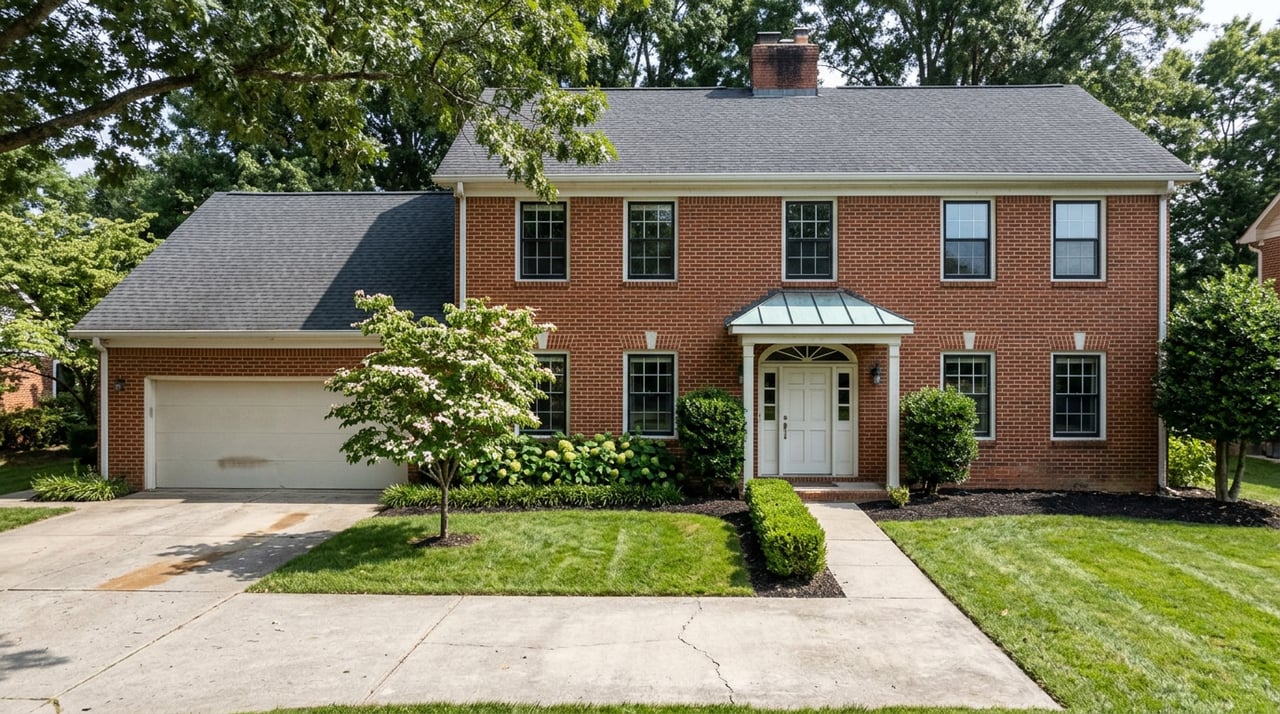
A cream-colored envelope showed up in mailboxes along Cherokee Boulevard and Scenic Drive this spring, and it did what these things tend to do: it made people nervous. Knox County's property assessor had sent out new appraisal notices, and for a lot of Sequoyah Hills homeowners, the number inside was startling. Countywide, values were reported up by roughly 60 percent since the last reappraisal in 2022. If you bought a house here for $700,000 four years ago, you may have opened that envelope and seen a figure north of a million.
Here's the part that gets skipped in the panic: that number is not your new tax bill. It's not even close to a reliable stand-in for one. Understanding why matters if you're buying, selling, or just trying to plan a decade of ownership in a neighborhood where a modest cottage and a riverfront estate can sit three doors apart.
What Actually Landed in the Mail This Spring
Knox County runs on a reappraisal cycle, and this was the year. Property Assessor Phil Ballard and Finance Director Chris Caldwell told local reporters the countywide increase in residential and commercial values landed around 60 percent since the prior 2022 appraisal, a jump reflecting four years of a real estate market that, as anyone who has shopped a house in Sequoyah Hills already knows, moved fast. The notices were mailed later than originally planned, though the assessor's office wasn't legally late, the state comptroller's office confirmed the statutory deadline is May 20.
The reappraisal itself does one job: it resets the appraised value of every parcel to reflect current market conditions. It says nothing yet about what you owe.
The Law That Keeps a Reappraisal From Becoming a Windfall
The Tennessee Comptroller's Office explains that Tennessee runs its property tax system through what's often called a certified tax rate, a truth-in-taxation statute that exists specifically to stop a reappraisal from functioning as a stealth tax hike. The logic is straightforward. If Knox County collected roughly a billion dollars in property tax revenue before reappraisal at a rate of $1.554 per $100 of assessed value, and total property values across the county rise by 25 percent, the county cannot simply keep the old rate and pocket the extra 25 percent. State law requires the rate to come down to a level that produces close to the same billion dollars, not a billion and a quarter.
Run the arithmetic on a single house and the effect is easier to see. A home whose value rises from $300,000 to $400,000, a 33 percent jump, would owe about $1,554 a year instead of $1,166 if the rate never moved, an increase of roughly $389. But because the certified rate is required to fall in proportion to the countywide increase, most homeowners see a bill that shifts by a few percentage points, not by 33 percent. Ballard has publicly floated the county rate dropping from its current $1.554 per $100 toward somewhere close to $1, though the exact figure wasn't final earlier this summer and was locked in by the county commission's August vote.
The Question That Actually Decides Your Bill
Once you understand the certified rate mechanism, the useful question stops being "how much did my appraisal go up" and becomes "how did my appraisal's increase compare to the countywide average." That comparison, not the raw dollar figure on the notice, is what determines whether your bill rises, falls, or barely moves.
| Your home's value increase vs. the ~60% countywide average | What happens to your county tax bill |
|---|---|
| Below average (say, 30-40%) | Bill likely decreases, since the new rate is set to the average increase |
| Roughly at average (~60%) | Bill stays close to flat |
| Above average (80% or more) | Bill likely increases, even though the rate fell |
This is the part that trips people up during a reappraisal year. A homeowner can open a notice showing their value up 55 percent, worry it means a 55 percent tax hike, and never realize the certified rate is designed to erase most of that. Meanwhile a neighbor whose home jumped 90 percent, maybe because of a recent addition or a lot that finally got reappraised for its river frontage, will see a real increase even under the lower rate.
Why Sequoyah Hills Doesn't Move as One Block
This distinction matters more in Sequoyah Hills than it would in a newer subdivision built by a single developer in a single decade. The neighborhood's housing stock spans nearly two centuries, from a tenant house on Scenic Drive dating to the 1850s to Tudor Revivals from the 1940s to contemporary builds finished in the past few years. Prices reflect that spread: modest, updated homes start in the $700s, while upmarket riverfront properties climb into the $3 to $5 million range. A neighborhood with that much internal variation is unlikely to see every parcel move by the same percentage in a reappraisal. A recently renovated kitchen, a rebuilt dock, or a teardown-and-rebuild on Lyon's View Pike can push one appraisal well past the countywide average while a home that hasn't changed hands or been touched in twenty years might land closer to it or below it.
One variable Sequoyah Hills buyers don't have to untangle is jurisdiction. The neighborhood was annexed into the city of Knoxville in 1917, so every parcel here sits fully inside city limits and pays the combined city and county rate, currently $3.7096 per $100 of assessed value under the prior schedule. Neighborhoods that straddle the city line can have two nearly identical houses paying different combined rates depending on which side of an invisible boundary they sit on. That particular complication doesn't apply here. What does apply is the internal spread of home values doing the same work a jurisdictional line does elsewhere, making the county average a poor stand-in for any individual bill.
What to Check Before You Assume Anything
If you're closing on a Sequoyah Hills home this fall, or you already own one and are trying to budget for next year, a few concrete steps beat guessing:
- Pull the property's pre- and post-reappraisal values from the county's public parcel lookup rather than relying on the mailed notice alone.
- Calculate the percentage change for that specific parcel and compare it to the roughly 60 percent countywide figure officials have cited, not to your own expectations.
- Remember the county and city portions of your bill each go through their own certified rate recalculation, so a change on one side of the ledger doesn't tell you what happened on the other.
- Wait for the actual bill, expected in October, before treating your parcel's tax amount as final. Public estimates from the assessor's office shifted over the course of the spring and summer, and the county commission voted on the final certified rate in August.
The Appeal Window Closed, But the Next One Comes Faster
If your new appraisal seems out of step with comparable homes nearby, the formal window to challenge it for this cycle has passed. Informal appeals closed in late May, as WBIR reported, and the Knox County Board of Equalization held its hearings in June, as AOL reported. That's worth knowing now for a different reason: Knox County's assessor announced a shift from a four-year reappraisal cycle to a two-year cycle starting with this round. Future adjustments should arrive smaller and more often rather than compounding into one large correction every four years, which is a meaningfully different planning horizon for anyone buying in Sequoyah Hills with an eye toward holding for a decade or more.
What This Means If You're Touring Homes This Fall
The reappraisal notice is real, the 60 percent countywide figure is real, and the certified rate law that keeps most bills from rising by anything close to that amount is real too. What isn't yet knowable, for any specific Sequoyah Hills address, is the final bill amount until the bill itself arrives. A buyer weighing a $875,000 listing against carrying costs should ask for the parcel's specific reappraisal percentage, not lean on the neighborhood average, and should use the county commission's August vote as the final county-rate figure rather than rely on estimates that circulated earlier in the summer.
If you're evaluating a Sequoyah Hills purchase and want help reading a specific property's appraisal history against the countywide numbers, or want a second set of eyes on what a listing's tax history actually implies for your carrying costs, Ashley Wade works this neighborhood block by block. Request your bespoke consultation and get answers grounded in the actual parcel, not the countywide average.
A Few Questions Worth Asking
Does a big jump in appraised value mean I overpaid for my house? No. Appraised value and purchase price are calculated differently, and a large reappraisal increase mostly reflects the county catching up to four years of market movement, not a judgment on your purchase.
When will I know my actual new tax bill? The bill itself is expected in October; the county commission voted on the final rate in August.
Does the certified rate apply the same way to condos in places like Sequoyah Square? The same state law applies, but condo appraisals move on their own schedule based on unit-level comparables, so a condo's percentage change can differ from a detached home's even in the same zip code.
This article is general information, not legal, tax or financial advice. Consult a qualified professional about your situation.