Ask a Sequoyah Hills seller whether their house is historic and most will say yes without pausing. Ask whether that same house needs a Certificate of Appropriateness before a buyer can touch the roof, and most sellers, and a fair number of agents, won't know the answer. The two questions sound like the same question. They aren't.
That gap matters if you're the one signing a renovation budget after closing. A buyer who assumes the whole neighborhood answers to a historic commission will pad the timeline and the cost for work that never needed a hearing. A buyer who assumes none of it does might start demolition on a facade that legally required a review first. The real answer depends on which side of a specific line you're standing on, and that line runs through a much smaller slice of Sequoyah Hills than the "historic neighborhood" label suggests.
What's Actually on the National Register
According to the About the Neighborhood page, Sequoyah Hills earned a spot on the National Register of Historic Places in 1979, but the listing covers something narrower than most buyers picture. It's the Talahi Improvements: the Sunhouse and Panther Fountains, cast stone benches and pillars, the widened intersections and concrete streets, the quaint streetlights, and Papoose Park's paired gates, all landscaping and streetscape elements left over from Robert L. Foust's 1920s Talahi development. No house carries that 1979 designation. If your future kitchen or your future roofline sits inside a structure rather than in the public right of way, the house itself is not included in the 1979 listing.
That's the first thing worth separating out before you write any offer contingent on renovation plans. "Historic neighborhood" in the marketing sense and "historically protected structure" in the zoning sense are two different claims, and only one of them applies to what you're actually buying.
The Line That Actually Does the Work
The mechanism that can slow down or reshape a renovation is a separate overlay entirely: the Scenic Drive Area of Sequoyah Hills Neighborhood Conservation Overlay, known as NC-1, which Knoxville-Knox County Planning says Knoxville City Council adopted on September 26, 2006. It covers a defined corridor. Properties inside that boundary answer to the Knoxville Historic Zoning Commission for exterior work. Properties outside it are not subject to that review.
Even inside the overlay, the rules carve out more room than people expect. According to the design guidelines themselves, interior alterations, wiring, plumbing, painting, and adding siding or roofing may require a standard building permit, but they don't require a Certificate of Appropriateness. The review kicks in for new construction, additions, and changes to a primary building's facade, not for the kind of maintenance work that shows up in most home inspection reports.
Here's how that breaks down in practice:
| Where the house sits | What's exempt from review | What triggers a Certificate of Appropriateness |
|---|---|---|
| Anywhere in Sequoyah Hills outside the Scenic Drive overlay | Not subject to this overlay | No review under this overlay |
| Inside the Scenic Drive overlay | Interior work, wiring, plumbing, painting, re-roofing, re-siding | New construction, additions, and any change to the primary facade |
| Inside the overlay, on a structure already marked "non-contributing" | Same interior exemptions | Same review process, but staff have documented that a loss of historic integrity gives them more flexibility on the outcome |
That last row is where the case file below earns its place.
What That Review Actually Looked Like for One Scenic Drive House
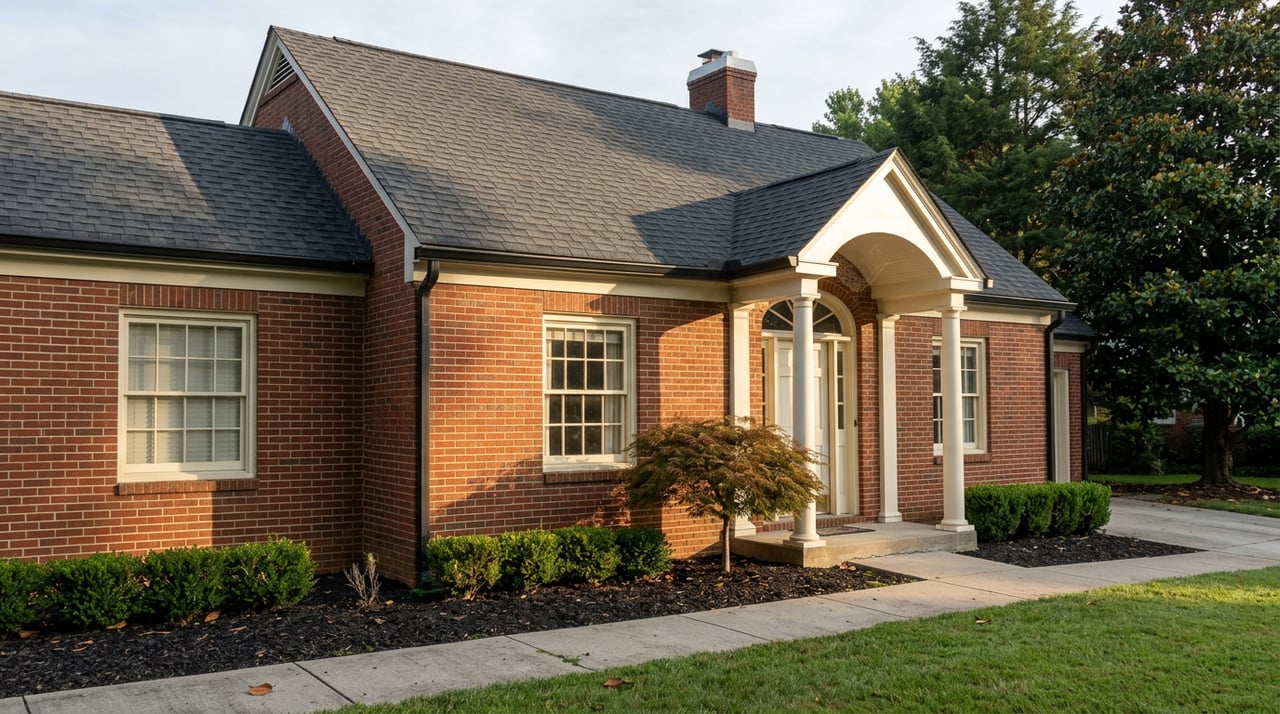
A one-story frame residence on Scenic Drive, brick veneer, hip and cross-gable roof, originally designed by landscape architect Elizabeth W. Dunlap, went through exactly this process in a case the city filed as 1-C-22-HZ. The owner had already completed extensive exterior rehabilitation before applying, so the review happened after the fact: the breezeway between the garage and the main house was enclosed, a covered porch was added to the rear elevation, the primary roof section was reframed, and the front porch, added back in 2013, was torn out and rebuilt smaller, at 15 feet 2 inches wide by 8 feet 4.75 inches deep, with a vaulted open timber truss gable in place of the earlier fiber cement shingle design. The central roofline was raised about four feet. Facade windows were swapped for full-height, four-light casements, and a brick exterior chimney on the facade was demolished.
Staff recommended approval, but not without a condition: since the extent of the changes meant the house no longer qualified as "contributing" to the district, the commission required the applicant to select facade replacement windows more in keeping with the home's original Ranch-style design. That's the actual texture of a Certificate of Appropriateness review inside the Scenic Drive overlay. It isn't a blanket no. It's a negotiation over specific materials and proportions, and the outcome shifts depending on whether the house is still considered a contributing structure to begin with.
How Old North Knoxville Does It Differently
For comparison, according to The Knoxville Focus, Old North Knoxville sits under a full historic overlay, not the narrower conservation-district model used on Scenic Drive. Homeowners there apply to the Historic Zoning Commission for any exterior change, with no carve-out for painting or re-roofing the way Scenic Drive's NC-1 guidelines allow. A three-project agenda from a single Knoxville Historic Zoning Commission meeting there included a carport demolition and rebuild with a porch restoration, window replacements, and a chimney rebuild Sequoyah Hills, at least along its Scenic Drive corridor, is working from a lighter version of that same rulebook.
Before You Write the Renovation Budget
If you're closing on a house anywhere in Sequoyah Hills and planning work beyond paint and fixtures, a few minutes of checking saves a lot of guesswork later.
- Confirm whether the parcel address falls inside the Scenic Drive NC-1 boundary. Knoxville-Knox County Planning can verify this against the design guideline document, and it's worth doing before you finalize a renovation timeline, not after.
- If it does fall inside the boundary, ask whether the structure is currently listed as contributing or non-contributing in the district inventory. That status shapes how much design latitude a review will allow, as the Scenic Drive case shows.
- Separate your planned scope into what's exempt and what isn't. Interior renovations, wiring, plumbing, and straightforward re-roofing or re-siding don't need a Certificate of Appropriateness inside the overlay. A new porch, an addition, or a facade change does.
- If new construction or an addition is on the table, check the material restrictions ahead of the design phase. The guidelines rule out T-111 plywood, vinyl or aluminum siding, and exposed concrete block on primary structures and permanent accessory buildings within the overlay, which affects both your contractor's material list and your budget.
A Few Things Worth Asking Before You Assume
Does repainting the house or replacing the roof require a hearing? Not inside the Scenic Drive overlay. Those categories, along with interior work, wiring, and plumbing, are specifically exempted from Certificate of Appropriateness review even though a standard building permit may still apply.
Is every house on Scenic Drive treated the same way? No. A structure's contributing or non-contributing status affects how much flexibility staff have during review, which is exactly what played out in the 2022 case above.
Is the rest of Sequoyah Hills also under historic protection? Only the landscaping and streetscape features from the Talahi development, the fountains, the benches, the streetlights, carry the 1979 National Register listing. Houses across the broader neighborhood, outside the defined Scenic Drive corridor, are outside that overlay.
A house doesn't need to sit on a landmark street to be worth buying carefully. It just needs someone checking the actual line before the renovation plan gets written. That's the kind of due diligence Ashley Wade brings to a Sequoyah Hills transaction, drawing on nearly two decades of construction and renovation background to separate what a listing implies from what the parcel actually allows. If you're weighing a house in this neighborhood and want a clear read on what you'd actually be taking on, request your bespoke consultation before you assume anything about the renovation ahead of you.
This article is general information, not legal, tax or financial advice. Consult a qualified professional about your situation.
