Thinking about renovating in Sequoyah Hills? It can feel like a balancing act. You want a home that works for your life today, but you also do not want to erase the character that makes this neighborhood so special. The good news is that in Sequoyah Hills, protecting charm and adding value often go hand in hand. If you understand what to preserve, what to improve, and where approvals may apply, you can make smarter decisions from the start. Let’s dive in.
Why Sequoyah Hills feels different
Sequoyah Hills has a distinct look and layout that sets it apart from many other Knoxville neighborhoods. According to the West City Sector Plan, the area began developing in 1925 and is recognized as Knoxville’s first subdivision completed with curvilinear streets.
That planning history still shapes the neighborhood today. Official materials describe deep setbacks, an estate-like setting, and a mature tree canopy. They also note that Sequoyah Hills includes an eclectic mix of architectural styles rather than one uniform design language.
You will see homes influenced by Tudor Revival, Colonial Revival, Georgian Revival, Neoclassical, Craftsman, and Ranch traditions. Because of that variety, renovation choices usually make the most sense when they respond to the original house itself, not a trend or a generic suburban remodel package.
Know your preservation context
One of the most important first steps is figuring out exactly where your property sits within Sequoyah Hills. Not every home is subject to the same review process.
According to Knoxville-Knox County Planning preservation materials, the broader neighborhood includes at least two distinct preservation contexts. The Scenic Drive area has a local NC-1 overlay, while the Talahi improvements are listed on the National Register of Historic Places.
That difference matters. If your property is in the Scenic Drive overlay, certain exterior changes may need formal review. If your property is only on the National Register and the work is privately funded, that does not trigger the same local review process.
What approvals may apply
If your home is in the Scenic Drive NC-1 overlay, exterior work may require a Certificate of Appropriateness before you can receive a building or demolition permit. The Scenic Drive guidelines state that additions, new construction, and demolition all require that approval.
At the same time, not every project goes through Historic Zoning review. Interior alterations, wiring, plumbing, painting, and artificial siding or roofing are not reviewed by the Historic Zoning Commission, though they may still require permits through the City.
The City also separates permit review by project type. Residential additions, alteration and repair work, and mechanical, electrical, and plumbing work are routed differently, and grading or land disturbance may require a separate site-development permit.
If your plans are more complex, early coordination can save time. The City notes that pre-application workshops and Planning staff guidance are available, and that can be especially helpful before major additions, accessory structures, or design changes.
Renovation ideas that usually fit best
In Sequoyah Hills, the strongest renovation strategy is often selective modernization. That means improving how the home lives and functions without overpowering the original design.
The Scenic Drive guidelines, which are based on the Secretary of the Interior’s Standards for Rehabilitation, favor repair over replacement and compatibility over imitation. They also make clear that additions should not overwhelm the original house.
Prioritize rear and side additions
If you need more square footage, placement matters. The local guidelines prefer rear or side additions and strongly discourage front additions because they can obscure the original architectural design.
That principle is practical as well as aesthetic. A rear or side addition can give you updated living space while preserving the street-facing look that contributes to Sequoyah Hills’ value and identity.
Preserve defining exterior details
The same guidelines encourage preserving original windows, doors, and entry features whenever possible. They also highlight decorative tile or shingle roofs as worth retaining when feasible.
In a neighborhood known for mature architecture and layered design styles, these details often do more than create charm. They help your home feel authentic, which can matter to future buyers looking for character without a full restoration project.
Choose materials carefully
When new work is added, the guidelines support materials that match or complement the existing home. They also discourage T-111, vinyl siding, aluminum siding, and exposed concrete block on primary buildings or permanent accessory structures.
That does not mean every update has to be a perfect replica. It means your renovation should feel visually compatible with the home you already have.
Protect the setting, not just the house
In Sequoyah Hills, value is tied to more than the structure itself. The Scenic Drive guidance stresses mature trees, minimal hardscape, narrow driveways, and fences that do not block the front facade.
This is an important point for planning exterior work. Removing too much landscaping, overbuilding the front yard, or widening paved areas can undercut the estate-like setting that makes the neighborhood distinctive.
Where renovation dollars may go further
If your goal is resale value, bigger is not always better. In fact, regional data suggests that measured, visible, midrange improvements often outperform large luxury additions.
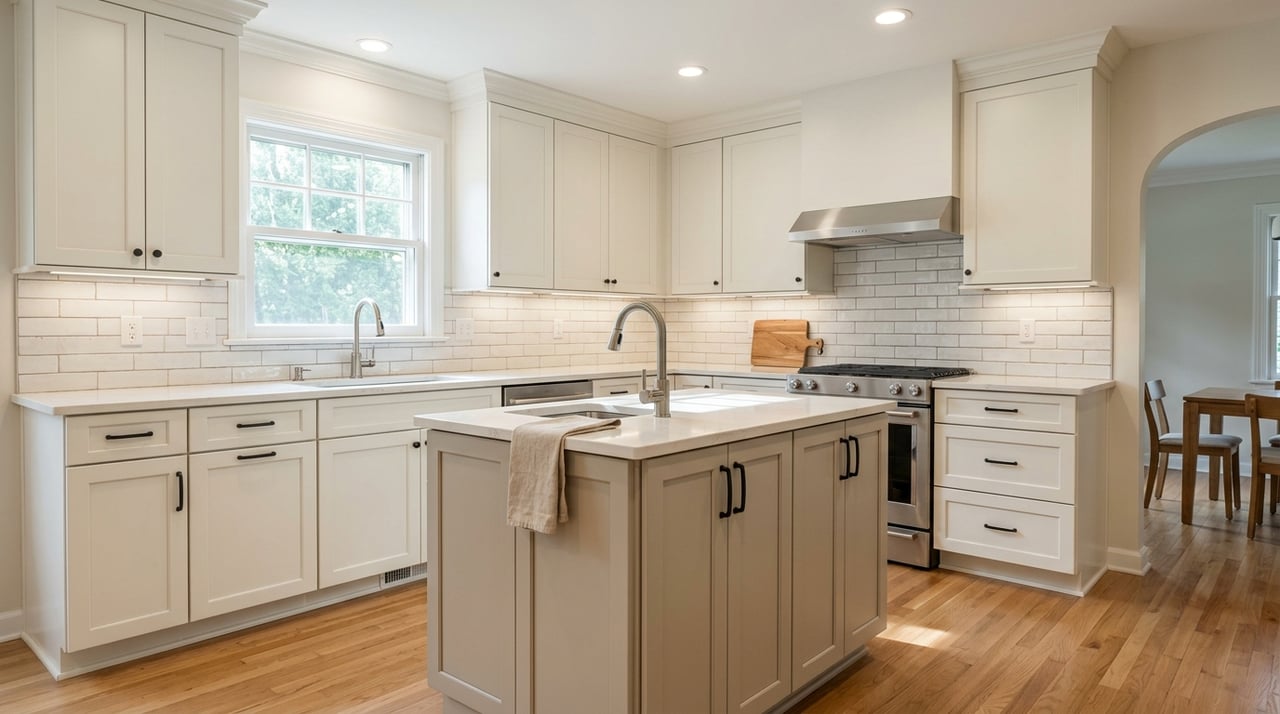
According to the 2025 Cost vs. Value report for the East South Central region, garage door replacement had an estimated return of 210.6%, steel entry door replacement returned 186%, manufactured stone veneer returned 128.4%, and a midrange kitchen remodel returned 104.7%.
By comparison, a midrange bath remodel returned 85.1%, asphalt shingle roof replacement returned 81%, vinyl siding returned 77.3%, a wood deck addition returned 71.2%, and an upscale primary suite addition returned just 21.7%.
For Sequoyah Hills, that data supports a practical approach:
- Improve curb appeal without changing the home’s core character
- Refresh kitchens for function and buyer confidence
- Update HVAC, electrical, and plumbing where needed
- Address roof and maintenance issues proactively
- Avoid oversized additions that may be expensive and harder to justify on resale
Why this approach fits today’s market
Sequoyah Hills continues to command attention in the Knoxville market. As of March 2026, Realtor.com reports a median listing price of $947,000, 21 active listings, and a seller’s-market description for the neighborhood.
The same research summary notes that Redfin reported a median sale price of $800,000 in February 2026, with homes selling in about 56 days. Since listing prices and closed-sale prices measure different things, they are not directly comparable, but together they point to a premium market with relatively tight supply.
In a market like that, buyers often respond well to homes that feel cared for, functional, and true to the neighborhood. Sellers may benefit most from improvements that reduce uncertainty, especially around systems, maintenance, kitchens, baths, and overall curb appeal.
A smart renovation checklist
Before you start drawing plans or collecting bids, it helps to work through a clear sequence.
1. Confirm your property’s review status
Find out whether your home is in the Scenic Drive NC-1 overlay, in the National Register context, or outside local design review areas. This step shapes everything that follows.
2. Identify the home’s defining features
Look at the roofline, front facade, windows, doors, porch details, and siting on the lot. These are often the elements most worth protecting.
3. Separate lifestyle upgrades from value upgrades
Some projects improve daily living. Others are more likely to support resale. The best plans usually balance both.
4. Budget for systems first
Mechanical, electrical, plumbing, drainage, and roof issues may not be glamorous, but they can have a major impact on marketability and peace of mind.
5. Talk with Planning early for major work
If you are considering an addition, demolition, accessory structure, or significant exterior change, early outreach can help you avoid delays and redesign costs.
Help may be available for qualifying homes
If your property qualifies, the City’s Residential Historic Preservation Program may offer a zero-interest, short-term construction loan for historic residential properties.
That kind of support can be worth exploring if you are planning preservation-minded work and want to manage project financing carefully.
Renovate with the next buyer in mind
Even if you plan to stay for years, it helps to think like a future buyer. In Sequoyah Hills, that usually means delivering a home that feels updated but not stripped of its identity.
The strongest results often come from thoughtful restraint. Keep the facade, windows, porch, roofline, and landscape character working in your favor, then modernize the parts of the home that improve comfort, safety, and confidence.
If you are weighing whether to renovate before selling, buy a home with update potential, or figure out which improvements are worth the investment in Sequoyah Hills, Ashley Wade can help you think through the numbers, the neighborhood context, and the likely buyer response with a tailored, high-touch approach.
FAQs
What renovation work in Sequoyah Hills may require design review?
- If your property is in the Scenic Drive NC-1 overlay, additions, new construction, and demolition require a Certificate of Appropriateness before a building or demolition permit can be issued.
Do interior renovations in Sequoyah Hills go through Historic Zoning review?
- Interior alterations, wiring, plumbing, painting, and artificial siding or roofing are not reviewed by the Historic Zoning Commission under the Scenic Drive guidelines, though other permits may still be required.
Which additions usually fit best in Sequoyah Hills?
- Rear and side additions are generally preferred, while front additions are strongly discouraged because they can obscure the original architectural design.
What exterior features are important to preserve in Sequoyah Hills?
- Original windows, doors, entry features, decorative tile or shingle roofs, mature trees, and the overall street-facing character are all identified as important features to retain when possible.
Which remodeling projects may add the most value near Sequoyah Hills?
- Regional 2025 Cost vs. Value data showed especially strong returns for garage door replacement, steel entry door replacement, manufactured stone veneer, and midrange kitchen remodels.
Is Sequoyah Hills a strong market for updated homes?
- Current market data points to a premium, relatively tight market, which suggests buyers may respond well to homes that preserve character while reducing uncertainty around condition and functionality.
